Skip to content
AquaReefBasin

Gear

Water Conditioners & Additives

One product in this category is genuinely non-optional: something that neutralizes the disinfectant in your tap water before that water meets your fish and your filter. Everything else here is situational. Bottled bacteria shorten a cycle you were going to complete anyway; clarifiers change how particles behave without changing why the particles are there. Nothing in this list is a substitute for a water change, and where a fix on this site calls for one, the water change comes first.

Core job: making tap water safe to put in a tank · 8 products listed

Read this first

  • Dosages come from the manufacturer's label, for the volume you are treating. This site prints no dosing figures for any product, for any purpose.
  • A conditioner that splits chloramine releases the ammonia half into the water. A small ammonia reading after a water change on a chloraminated supply is expected rather than a filter failure.
  • Products that bind or detoxify ammonia usually convert it to a less harmful form rather than removing it. Your test kit still counts it, and you should still change water.
  • Medications are a separate matter entirely. They are grouped apart below, they carry no dosing or usage guidance here, and none of them is recommended anywhere else on this site. If an animal is unwell, the water test comes first and an aquatic veterinarian comes next.

What actually separates one from another

  • Whether it handles chloramine as well as free chlorine. Many utilities use chloramine, and it does not gas off on any timescale that helps you.
  • Concentration, because that is what determines how far a bottle goes rather than the volume printed on the front.
  • What the product actually claims to do on its own label — additives get described loosely in conversation and precisely on the bottle.
  • Shelf life. Conditioner is inexpensive and an old bottle that has lost strength presents as a mysterious ammonia problem.

Side by side

Dechlorinators — 4 products
ProductKey specBest for
Seachem Prime Water Conditioner, 500 ml500 ml, fresh and salt waterThe default conditioner for anyone doing weekly water changes on a tank of any size.
Tetra AquaSafe Plus Conditioner, 33.8 oz33.8 oz bottleLarger tanks, or anyone changing water on several tanks in the same session.
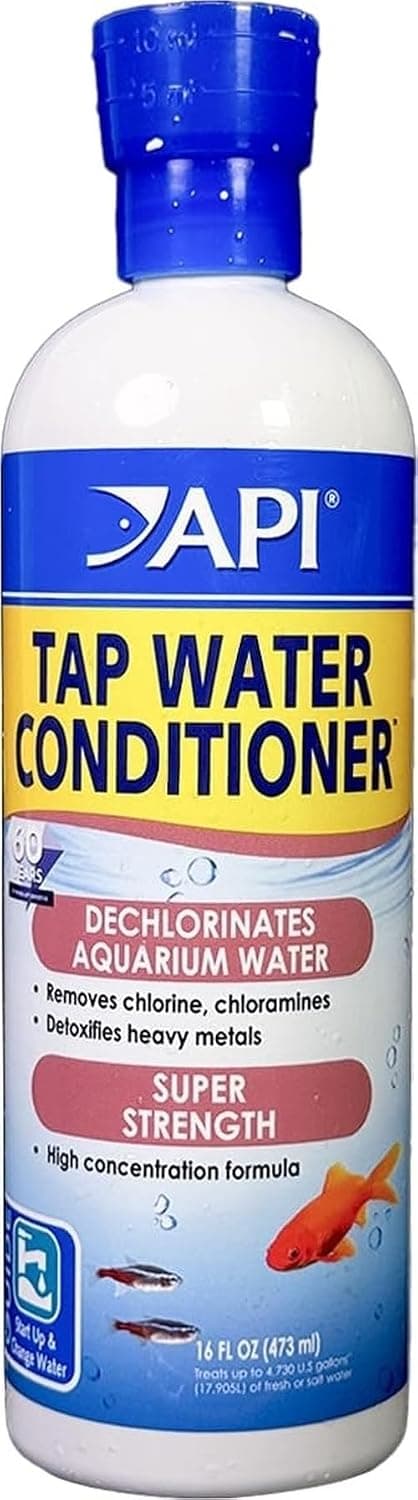
API Tap Water Conditioner, 16 oz16 oz, concentratedA single freshwater tank where storage space matters more than bottle size.
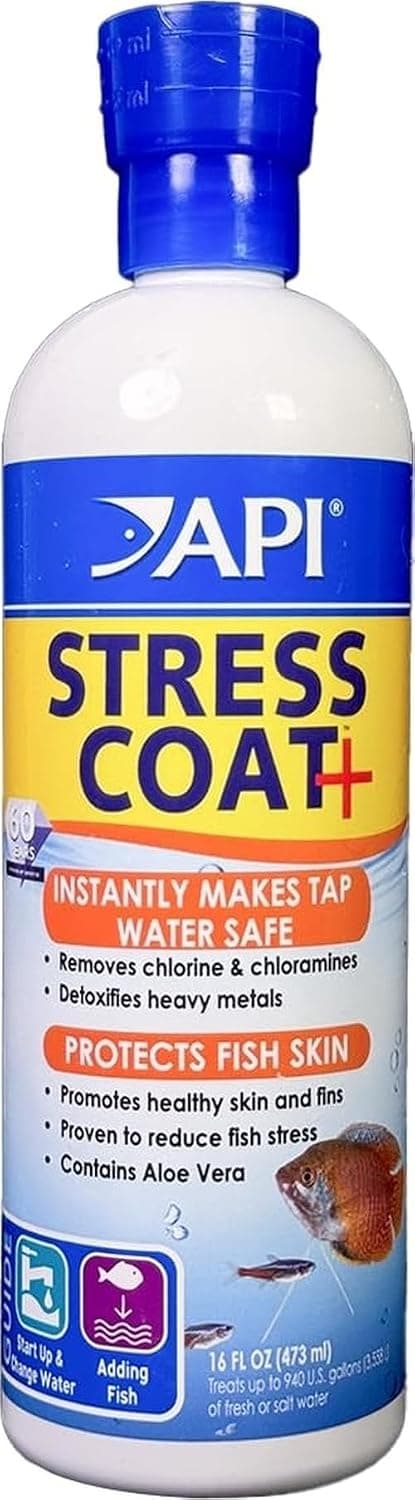
API Stress Coat Conditioner, 16 oz16 oz, contains aloeSomeone who wants a conventional dechlorinator and does not mind the additional aloe content.
Bacteria and clarifiers — 3 products
ProductKey specBest for
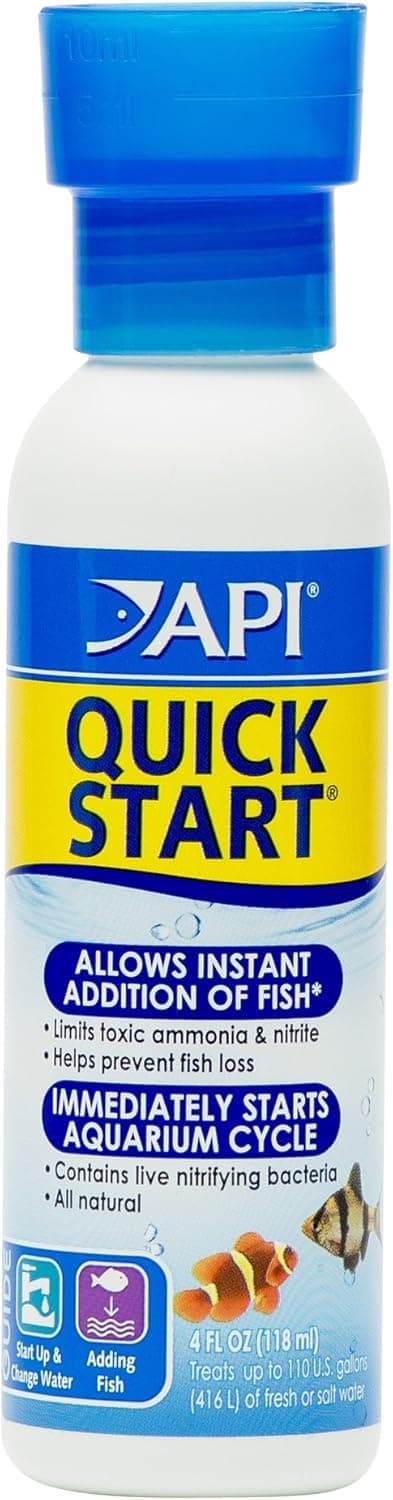
API Quick Start Nitrifying Bacteria, 4 oz4 oz, fresh and salt waterA brand-new setup, or a tank rebuilding its colony after filter media was lost.
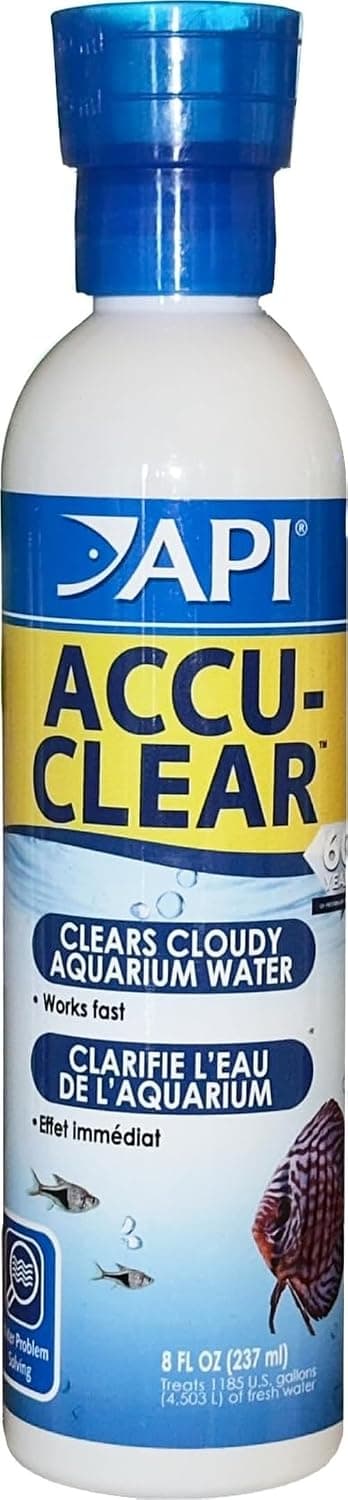
API Accu-Clear Water Clarifier, 8 oz8 oz, freshwaterFine particulate haze after new substrate goes in or the bed is disturbed.
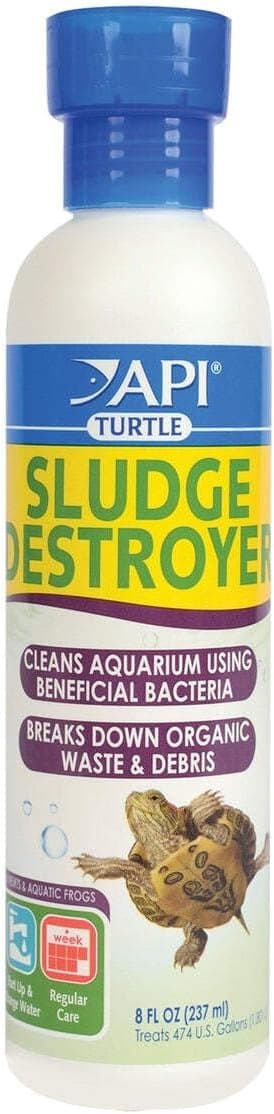
API Turtle Sludge Destroyer, 8 oz8 oz, turtle habitatsA turtle habitat, which is the use the listing describes.

Medications — label use only holds one product, so there is nothing to compare it against. It is described in full below.

The products

Dechlorinators

The one thing every tank on municipal water needs. Treat every drop of replacement water, including top-ups.

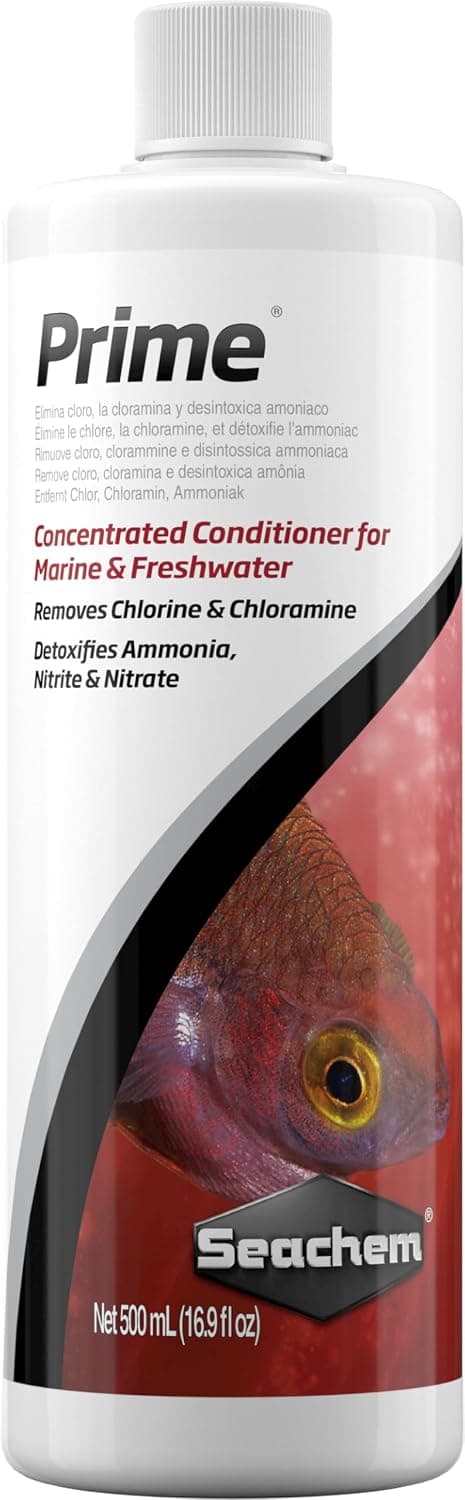
  • Seachem Prime Water Conditioner, 500 ml

    Core pick

    Seachem Prime Water Conditioner, 500 ml

    500 ml, fresh and salt water

    A concentrated conditioner sold in a 500 ml bottle, described in the listing as removing chlorine and detoxifying, for fresh and salt water alike. It is the product most keepers end up with because a small bottle treats a lot of water. Dose it by the label for the volume you are treating; we publish no figures.

    Why this badgeThe listing states it is a dechlorinator and detoxifier for both fresh and salt water, which is exactly the job this category exists for.

    The listing states this is a dechlorinator and detoxifier for fresh and salt water.

    Good

    • Covers both fresh and salt water, so one bottle serves a household with more than one kind of tank.
    • The 500 ml size is large enough that regular weekly water changes do not empty it quickly.
    • Concentrated formats mean less bottle to store under the tank stand.
    • A single product for the one step no tank on municipal water can skip.

    Watch out

    • Concentration means a small measurement error is a large dosing error, so a proper measuring cap matters.
    • The detoxifying claim leads people to expect their ammonia reading to fall, and total ammonia tests still count converted ammonia.
    • The 500 ml bottle is more than a single small tank will get through before it has been open a long time.

    Best forThe default conditioner for anyone doing weekly water changes on a tank of any size.
    Check it on Amazon
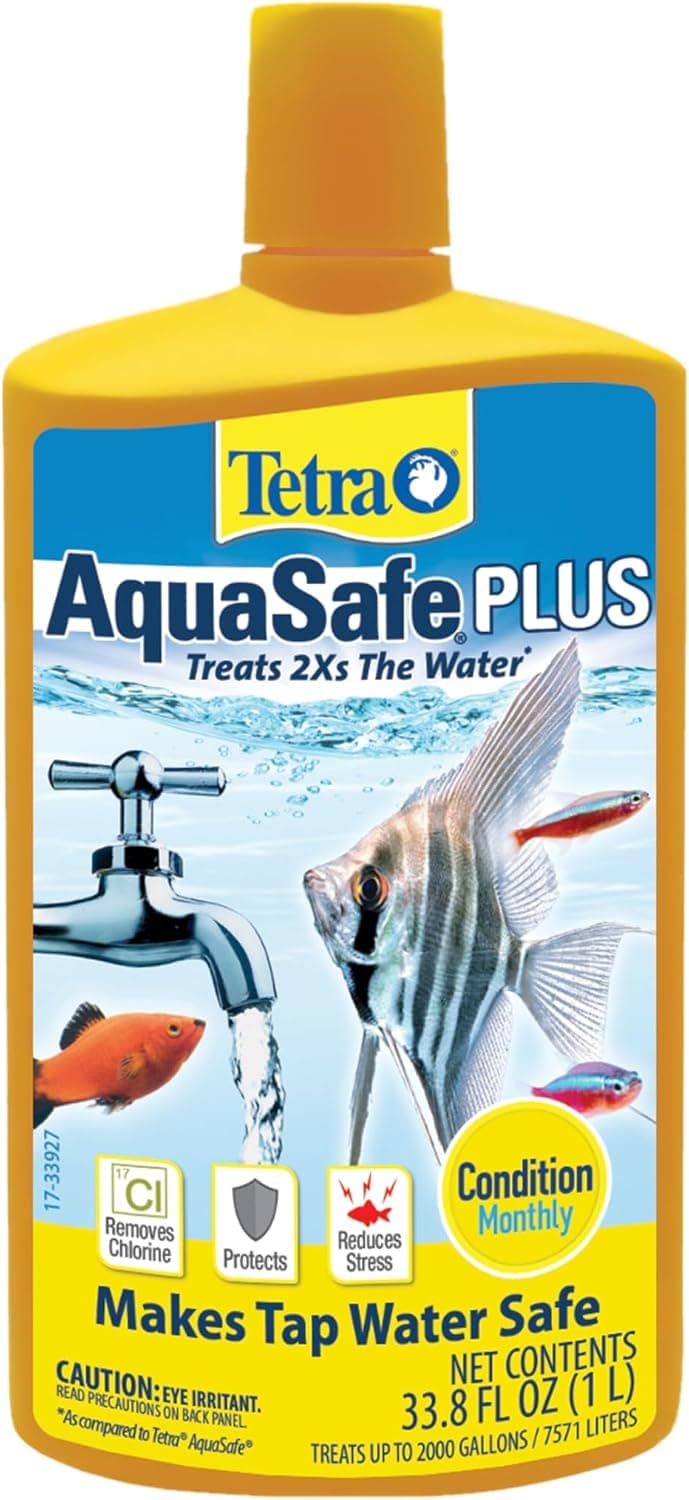
  • Tetra AquaSafe Plus Conditioner, 33.8 oz

    Largest bottle here

    Tetra AquaSafe Plus Conditioner, 33.8 oz

    33.8 oz bottle

    A large 33.8 oz bottle of chlorine-removing conditioner. The listing describes a double-strength dosing option and monthly use, which is worth reading carefully on the label itself because it changes how far the bottle goes. Suited to larger tanks or to households changing a lot of water at a time.

    Why this badgeAt 33.8 oz this is the biggest single container of conditioner in the category.

    The listing states it removes chlorine, and describes double-strength dosing and monthly use.

    Good

    • The largest volume in this category, which suits big tanks and frequent changes.
    • A familiar, widely stocked product that is easy to replace locally when it runs out.
    • The bottle format is straightforward to pour and measure without a syringe.
    • Listed for chlorine removal, the core job of the category.

    Watch out

    • A 33.8 oz bottle is a lot of conditioner for a single small tank to work through before it ages.
    • The double-strength option described in the listing means there is more than one correct dose, so the label needs reading rather than skimming.
    • Large bottles take up more space than concentrated alternatives for the same amount of treated water.

    Best forLarger tanks, or anyone changing water on several tanks in the same session.

    Check it on Amazon
  • API Tap Water Conditioner, 16 oz

    Most concentrated

    API Tap Water Conditioner, 16 oz

    16 oz, concentrated

    A concentrated dechlorinator in a 16 oz bottle. The concentration is the point — the bottle is modest and treats a disproportionate amount of water. As with every product in this category, the dose comes from the label rather than from us.

    Why this badgeThe listing describes it as a concentrated dechlorinator, which is what makes a 16 oz bottle go a long way.

    The listing states this is a concentrated dechlorinator.

    Good

    • Concentrated, so a 16 oz bottle lasts far longer than the size suggests.
    • A middle-sized bottle that suits a single tank without sitting open for a year.
    • Straightforward single-purpose product with no secondary claims to interpret.
    • Widely available, which matters for something you should never run out of.

    Watch out

    • Concentration makes accurate measurement more important, particularly on small tanks.
    • Single-purpose, so it does nothing beyond the dechlorination step.
    • The listing does not describe salt water use, unlike some alternatives in this category.

    Best forA single freshwater tank where storage space matters more than bottle size.

    Check it on Amazon
  • API Stress Coat Conditioner, 16 oz

    API Stress Coat Conditioner, 16 oz

    16 oz, contains aloe

    A 16 oz conditioner that the listing describes as containing aloe and reducing fish stress. Treat the stress claim as the manufacturer's description rather than as a health effect this site is endorsing — it is a conditioner, and its dechlorination job is the part we can speak to.

    The listing states this is a conditioner containing aloe, and that it reduces fish stress.

    Good

    • Does the dechlorination job that every tank on municipal water needs.
    • A 16 oz bottle is a practical size for one or two tanks.
    • Easy to find in general pet retail as well as online.
    • Familiar product with clear label instructions for dosing.

    Watch out

    • The aloe content changes how the water behaves at the surface for some keepers, which is worth knowing before a large dose.
    • The stress claim is the listing's, not a demonstrated benefit we can point at.
    • Nothing here treats an unwell animal, and this product should not be reached for as if it does.

    Best forSomeone who wants a conventional dechlorinator and does not mind the additional aloe content.

    Check it on Amazon

Bacteria and clarifiers

Situational products. They can shorten a cycle or change how suspended particles behave; neither removes the reason a problem started.

  • API Quick Start Nitrifying Bacteria, 4 oz

    API Quick Start Nitrifying Bacteria, 4 oz

    4 oz, fresh and salt water

    A 4 oz bottle of nitrifying bacteria, listed for fresh and salt water. Products like this can shorten a cycle by seeding the colony you would otherwise have to grow, and none of them makes cycling instant. Keep testing daily and wait for both ammonia and nitrite to read zero before stocking.

    The listing states this is bottled nitrifying bacteria for fresh and salt water.

    Good

    • Can meaningfully shorten a cycle when the bottle has been stored well.
    • Listed for fresh and salt water, so it is not tank-type specific.
    • Small 4 oz format suits a one-off use during a new setup.
    • Useful after a filter accident, when a colony has to be rebuilt from little.

    Watch out

    • A bottle that has been warm on a shelf for a long time may contribute very little, and there is no way to tell by looking.
    • It changes nothing about the need to test daily and stock gradually.
    • It is not a fix for a maintenance problem in an established tank, and using it as one wastes it.

    Best forA brand-new setup, or a tank rebuilding its colony after filter media was lost.

    Check it on Amazon
  • API Accu-Clear Water Clarifier, 8 oz

    API Accu-Clear Water Clarifier, 8 oz

    8 oz, freshwater

    An 8 oz freshwater clarifier that works by clumping fine suspended particles so the filter can catch them. It is a cosmetic tool with a narrow use: physical cloudiness that mechanical media is too coarse to remove. It does nothing about a bacterial bloom, and nothing about why the particles are there.

    The listing states it clumps fine suspended particles, for freshwater.

    Good

    • Genuinely useful for fine physical haze after a rescape or a substrate disturbance.
    • Works with your existing mechanical media rather than requiring new equipment.
    • Small 8 oz size is appropriate for something used occasionally.
    • Clear, narrow purpose that is easy to match to the right problem.

    Watch out

    • Water often looks worse before it looks better, as the clumps become visible.
    • It does not address a bacterial bloom, which is the more common cause of white cloudiness in a young tank.
    • Clumped material loads mechanical media quickly, so the filter needs checking a day later.

    Best forFine particulate haze after new substrate goes in or the bed is disturbed.

    Check it on Amazon
  • API Turtle Sludge Destroyer, 8 oz

    API Turtle Sludge Destroyer, 8 oz

    8 oz, turtle habitats

    An 8 oz sludge and waste remover which the listing specifically frames for turtle habitats. That framing matters: it is sold for a setup with a very different waste profile from a planted community tank. Listed here for completeness rather than as a general recommendation.

    The listing states this is a sludge and waste remover, for turtle habitats.

    Good

    • Targets accumulated organic sludge, which is a real problem in heavy-waste setups.
    • Small 8 oz bottle appropriate to occasional use.
    • The listing is specific about its intended habitat, which makes the match easy to judge.
    • Complements rather than replaces the physical work of siphoning.

    Watch out

    • Listed for turtle habitats, so it is not the obvious choice for an ordinary freshwater fish tank.
    • Sludge in a fish tank is usually best removed with a gravel vacuum, which costs nothing per use.
    • Adding an organic load reducer without reducing the input leaves the underlying cause in place.

    Best forA turtle habitat, which is the use the listing describes.

    Check it on Amazon

Medications — label use only

Listed for completeness and described only as the listing describes them. Use is a matter for the product label and for an aquatic veterinarian. No dosing, no indications, and no recommendation is given here.

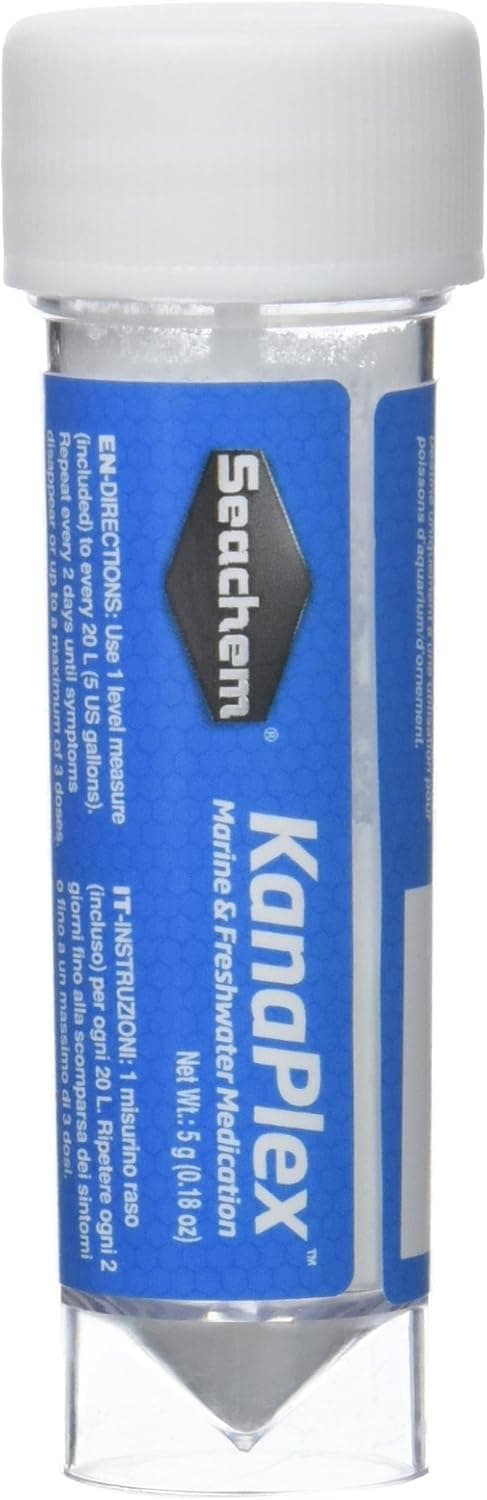
  • Seachem Kanaplex, 5 g

    Seachem Kanaplex, 5 g

    5 g, medication

    This is a medication. It is listed here only because it appears in this product category, and it is described strictly as the listing describes it: an aquarium medication supplied in a 5 g quantity. This site gives no dosing, no indications and no usage guidance for it, and it is not recommended on any troubleshooting page.

    The listing states this is an aquarium medication, supplied as 5 g.

    Good

    • Supplied in a small 5 g quantity.
    • Comes with the manufacturer's own instructions, which are the only instructions that apply.
    • Clearly identified as a medication rather than as a general-purpose additive.
    • Sold by a manufacturer whose labeling is straightforward to read.

    Watch out

    • It is a medication, and medication use in fish is a veterinary matter rather than a troubleshooting step.
    • Nothing on this site will tell you when or whether to use it, so it is not a purchase you can make on our advice.
    • Reaching for a medication before testing water and changing it is the wrong order of operations in almost every case.

    Best forUse only as directed by the manufacturer's label and in consultation with an aquatic veterinarian.

    Check it on Amazon

Common questions

Do I need a conditioner if I let the water stand overnight first?

That works for free chlorine and does not work for chloramine, which is deliberately stable and will not leave on any useful timescale. Find out which your utility uses — the annual water quality report they publish will say — and if it is chloramine, standing water is not a substitute for treating it.

My ammonia test reads positive right after a treated water change. Is the conditioner faulty?

Probably not. On a chloraminated supply the conditioner breaks the molecule apart and the ammonia half is genuinely in the water, where your kit reads it. In an established tank the biological filter clears that within a day. In an uncycled tank it adds to the load, which is a reason to change water in moderate amounts rather than enormous ones.

Will bottled bacteria let me add fish immediately?

No. A good product can shorten a cycle meaningfully, but you still have to test daily and wait for both ammonia and nitrite to read zero before you stock. Treat it as a head start of uncertain size rather than as a switch.

How much of any of these should I use?

Whatever the label on the bottle in your hand says, for the volume you are treating. Concentrations differ enormously between products that look similar, and we do not publish dosing figures for anything.

Where this comes up

Parameters this category touches